
If you’re thinking that your weekly routine involves rummaging through containers, make sure you’re discovering a wilted bag of greens, and replacing yet another duplicate yogurt, it’s time to rethink how you store food. Good fridge organization for small kitchens isn’t about picture-perfect shelves; it’s about a system that fits your cooking habits, keeps food visible, and makes meal prep faster. With the right zones, containers, and a simple weekly routine, even a compact fridge can run like a pro pantry on cool air.
Why small fridges feel cramped—and how to fix that
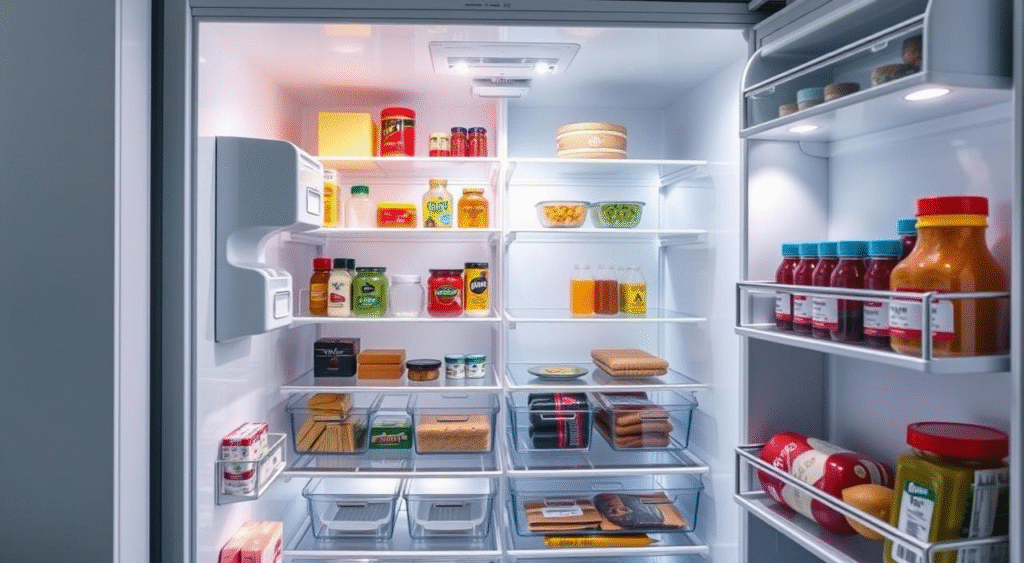
A compact model (or a slimline top-freezer) usually gives you shallow shelves, tight door bins, and one produce drawer. The result: items layer in front of each other, then vanish. You don’t need a bigger appliance—you need smarter placement and strict visibility.
Three problems to solve
- Buried items: food hides behind taller packaging.
- Random placement: no “home” for categories, so things wander.
- Inconsistent cleanouts: older food lingers and crowds new groceries.
Three principles that change everything
- Clear line of sight: see the back of every shelf without moving stacks.
- Same items, same spot: category “homes” stop the drift.
- FIFO: first in, first out—older items always sit in front.
The zone system for small refrigerators (set this up once)
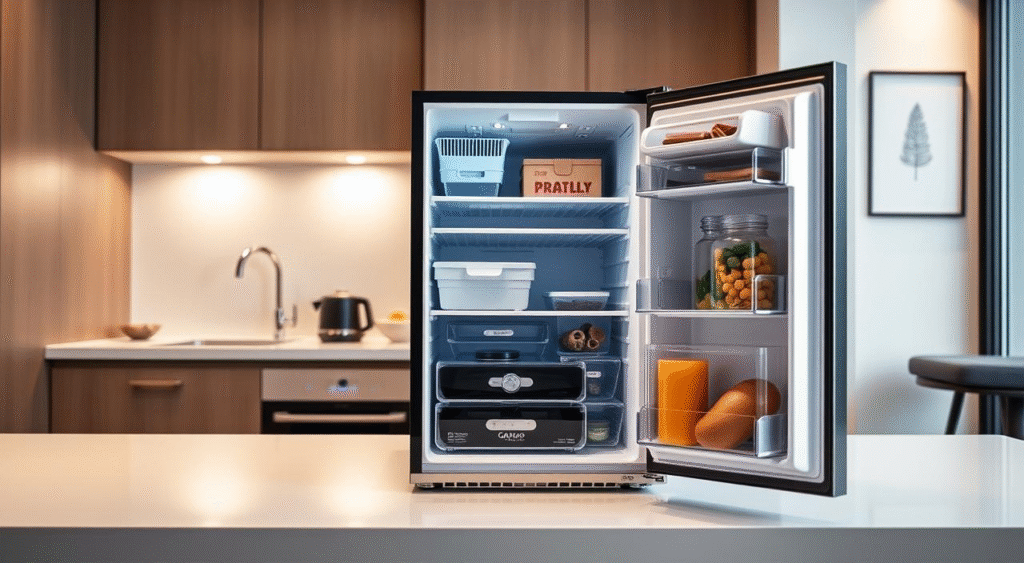
Your fridge doesn’t have uniform temperatures. Use that to your advantage.
| Zone | Where it is | What it’s best for | Notes |
|---|---|---|---|
| Upper shelves (slightly warmer) | Top and near the light | Ready-to-eat foods: leftovers, drinks, jams, herbs | Keep lidded; strong smells in sealed containers |
| Middle shelves (steady cold) | Eye level | Dairy and eggs | Clear bins keep small tubs together |
| Lower shelf (coldest shelf) | Above the drawers | Raw meat/fish (tray or bin) | Always use a leakproof tray/bin to prevent drips |
| Crisper drawers | Bottom drawers | Produce—one high humidity for leafy veg, one low humidity for fruit | Don’t overfill; airflow matters |
| Door (warmest spot) | Hinged storage | Condiments, sauces, nut butters, pickles | Not for milk or raw eggs—too warm |
Quick rule: the more “ready to eat” a food is, the higher it lives; raw proteins live low where it’s coldest and contained.
Declutter first: a 20-minute reset that pays off
- Empty by category (condiments, dairy, produce, proteins, leftovers).
- Check dates + quality (use your senses; toss what’s off).
- Wipe shelves and bins (warm, soapy cloth; dry before refilling).
- Consolidate duplicates (combine half-used bottles).
- Assign zones (label shelves/bins so everyone plays along).
Keep vs. decant
- Keep in original: items with important labels/dose/expiry (medicine, specialty sauces).
- Decant: washed fruit/veg into vented containers; grains or cooked rice into flat, shallow boxes for faster cooling.
Containers that earn their space (and which to skip)
Choose clear, stackable pieces with airtight lids. Match heights so stacks line up neatly.
| Container/tool | Best for | Why it works | Tips |
|---|---|---|---|
| Shallow, wide boxes | Leftovers, meal-prep portions | Chill faster, stack cleanly | Label lid + side with date |
| Narrow, tall boxes | Washed herbs, cut veg sticks | Fits door or shelf gaps | Add a paper towel to absorb moisture |
| Clear bins (pull-out) | Yogurts, cheese, deli packs | One-hand access, no strays | Label the bin (“Dairy · Yogurt”) |
| Produce keepers (vent + tray) | Berries, leafy greens | Extends freshness | Don’t overcrowd—airflow matters |
| Egg tray with lid | Eggs (if not in carton) | Stacks neatly | Door is too warm; keep on middle shelf |
| Leakproof raw-protein bin | Meat, fish in packages | Prevents drips, easy to clean | Lives on the lowest shelf |
| Lazy Susan (small) | Jars and condiments on a shelf | Nothing gets lost in the back | Choose 23–28 cm to fit compact fridges |
| Shelf riser (low profile) | Short jars under taller items | Doubles vertical space | Measure height first |
Skip: opaque containers (you forget what’s inside), random shapes (waste space), anything without a tight lid.
FIFO and weekly inventory: stop waste cold
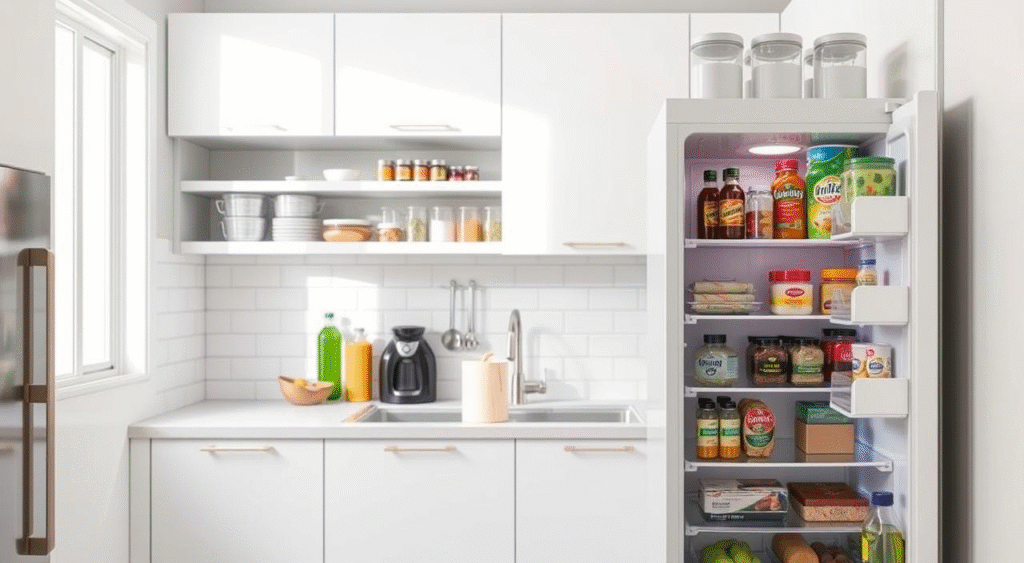
- FIFO every shop day: slide older items to the front; new stock goes behind.
- Leftovers rule: label with date; aim to use within 2–3 days. Put them on the top shelf front-and-center.
- Weekly two-minute scan: check produce drawers and the “use-soon” zone; plan one meal around what’s aging.
Stick a tiny list on the door: - “Running low” column (milk, eggs, greens).
- “Use this week” column (half pepper, opened broth). Take a photo before shopping.
Food safety basics (small space, zero risk)
- Fridge temp: set to about 4°C / 40°F or a notch colder; use a fridge thermometer if your dial is vague.
- Cooling leftovers: portion into shallow containers so they cool quickly before stacking.
- Raw proteins: bottom shelf in a sealed bin.
- High-risk items (seafood, cooked rice, cut fruit): keep cold and consume promptly.
A layout you can copy (three scenarios)
1) Solo cook, under-counter fridge
- Top shelf: drinks, ready-to-eat leftovers in shallow containers.
- Middle: dairy (pull-out bin), eggs.
- Bottom: raw protein bin (sealed).
- Crispers: left = leafy veg (high humidity), right = fruit (low).
- Door: condiments, nut butters, small milk or alt-milk cartons.
2) Couple, standard slim fridge
- Top left: “Eat first” bin (dated leftovers).
- Top right: small Lazy Susan for jars.
- Middle: dairy bin + snack bin (yogurts, cheese sticks).
- Bottom: raw protein bin + meal-prep boxes for cooked grains/beans.
- Crispers: greens/herbs in produce keepers; fruit loose with paper liner.
- Door: sauces, pickles, hot sauces, small juice.
3) Family with kids
- Top: adult leftovers and meal components (out of reach).
- Middle: kid-height snack bin (washed fruit cups, cheese), dairy bin.
- Bottom: raw protein bin; next to it, a bin labeled “Dinner Prep” (tonight’s ingredients).
- Crispers: one drawer just for lunchbox produce.
- Door: condiments, dressings; keep milk on a shelf, not the door.
Produce: keep it longer without babysitting
- Leafy greens: wash, spin dry, store in a vented container with a paper towel.
- Berries: keep dry; if washing first, dry fully and use a container with a raised tray.
- Herbs: soft herbs (parsley, cilantro) in a jar with a little water, loosely covered; hardy herbs (rosemary, thyme) in a dry, vented box.
- Ethylene dance: apples and bananas (ripening powerhouses) don’t live with leafy greens.
Door strategy: use it, but wisely
The door runs warm. It’s perfect for: mustard, ketchup, chili paste, pickles, mayo, nut butters, small jars, vitamins that can be refrigerated (if labeled safe). Not for milk or raw eggs—those deserve colder shelves.
Add narrow baskets to corral mini items so opening/closing doesn’t send bottles flying.
Simple labels that people actually read
- Large, clear text on bin fronts: “DAIRY · YOGURT”, “EAT FIRST”, “SNACKS”.
- Leftovers: date on the lid + side (you see it from any angle).
- Color dot system (optional): green = safe all week, yellow = use soon, red = eat today.
Cleaning and care: five minutes a week, one shelf a month
Weekly (5 minutes):
- Remove “Eat first” bin; use or toss.
- Wipe the spilliest shelf and the door handles.
- Quick check of raw protein bin.
Monthly (15–20 minutes): - Pull one shelf or drawer, wash with warm soapy water, dry, reinstall.
- Rotate crisper drawers next month (you’re never tearing down the whole fridge at once).
Seasonal (30–40 minutes): - Full reset: defrost if needed, deep clean gaskets, replace any cracked bins or warped containers.
Budget picks: organize without overspending
You don’t need a designer setup—just a few reliable tools.
| Tool | Typical price | Why it’s worth it |
|---|---|---|
| 2–3 clear pull-out bins | $6–$12 each | Creates “homes” for drift-prone categories |
| 4 shallow meal-prep boxes | $12–$20 set | Stack flat; perfect for leftovers |
| Small Lazy Susan | $8–$18 | No more lost jars |
| Produce keeper (1–2) | $10–$20 each | Extends life of greens/berries |
| Fridge thermometer | $6–$10 | Confirms you’re at 4°C / 40°F |
Free wins: reuse wide, clear takeout tubs for grain prep; cut a paper liner for the fruit drawer; repurpose a small shoebox lid as a “leak catcher” under raw meat packaging (until you buy a sealed bin).
Common mistakes (and the fast fix)
| Mistake | What it causes | Fix |
|---|---|---|
| Storing milk in the door | Spoilage from warmer temps | Move milk to a cold middle shelf |
| Deep, tall leftover containers | Slow cooling, food gets lost | Switch to shallow containers; label dates |
| Overfilling crispers | Poor airflow, faster spoilage | Fill to ~70%; add a paper liner |
| Raw meat on an open shelf | Drips and contamination risk | Use a sealed bin on the lowest shelf |
| Random condiment sprawl | Duplicates, lost items | Lazy Susan + a small “condiments” bin |
| Opaque bins | You forget what’s inside | Clear, labeled bins only |
A five-day “use-it-up” plan (optional but powerful)
On Sundays, set one mini-goal for the week’s older items. Examples:
- Monday: omelet night (use half pepper, bits of cheese).
- Tuesday: grain bowls (leftover rice + roast veg).
- Wednesday: pasta with “last spoon” sauces.
- Thursday: soup using limp veg + open broth.
- Friday: snack board dinner (cured meats, odds and ends).
You’ll clear space and save money—without feeling like you’re eating scraps.
Conclusion
When space is tight, a tidy fridge is less about aesthetics and more about working rules. Set up zones based on temperature, give each category a labeled “home,” and switch to clear, stackable containers that keep food visible. Practice FIFO on grocery day, run a two-minute weekly scan, and keep a small “Eat first” bin front-and-center. With this approach to fridge organization for small kitchens, your compact appliance stops being a clutter magnet and starts supporting how you actually cook—fewer duplicates, faster prep, less waste.
FAQs
What’s the single biggest win for a tiny fridge?
Create an “Eat first” bin on the top shelf, front-and-center. Anything opened or close to its date goes there. Empty it weekly.
Where should I store eggs and milk?
Keep eggs and milk on a shelf, not the door. The door is the warmest zone; shelves stay colder and steadier.
How often should I clean my fridge?
Wipe a spill and check the “Eat first” bin weekly; deep clean one shelf or drawer per month so it never becomes a big job.
Are produce keepers worth it?
If you buy greens or berries often, yes. Vented containers with a tray extend freshness and reduce mushy fruit.
What containers work best for leftovers?
Shallow, wide containers cool faster and stack neatly. Label the date on the lid and side.
My door is crammed with sauces—help!
Add a small Lazy Susan on a shelf for most-used jars and use the door for tall or rarely used condiments. Consolidate duplicates.
Is FIFO complicated?
Not at all. On shop day, slide older items to the front, new behind. That’s it—and it stops waste cold.
How do I keep kids from scattering snacks everywhere?
Add a kid-height snack bin on the middle shelf and label it clearly. Keep adult items higher.