
A good small-space move-in checklist does more than list boxes—it helps you arrive ready. Measure first, bring only what fits your life now, and plan a layout that respects walkways, doors, and storage. The goal isn’t to cram everything in; it’s to land calmly and make a home by the first week.
Three quick wins before anything else
- Measure doors, lifts, and the tightest turn on the route to your unit.
- Decide your “must-keeps” (daily use) vs “nice-to-have” (store/sell).
- Sketch a simple floor plan so every big piece already has an address.
The unique challenges of small spaces (and simple fixes)
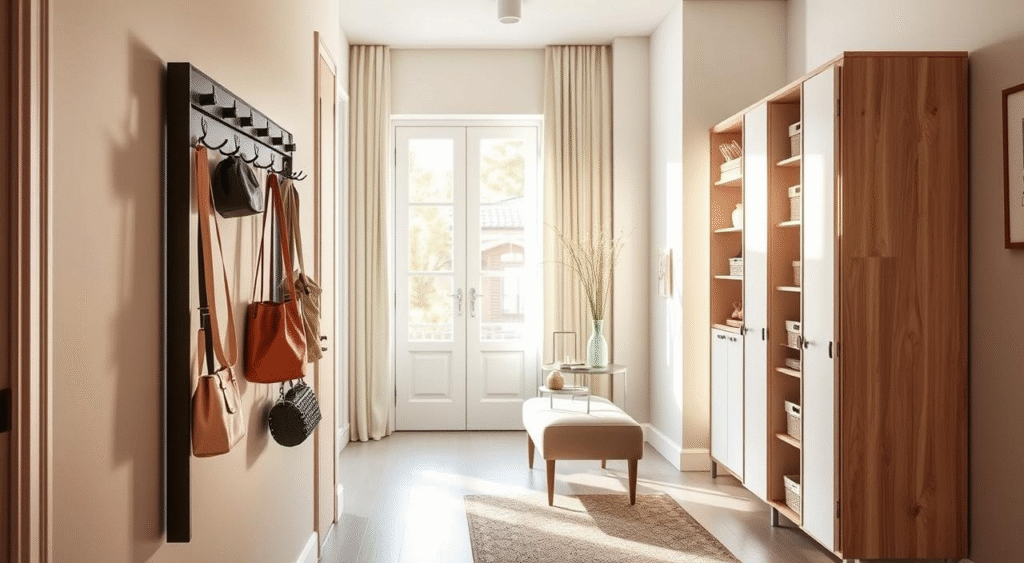
Why compact homes need special planning
Every centimetre matters. A 3-seat sofa that can’t turn the stairwell isn’t a bargain. Plan depth, height, and swing/clearance for doors, windows, and wardrobes.
Common pitfalls to avoid
- Under-decluttering: moving duplicates and “someday” items.
- Oversized furniture: deep arms, bulky backs, low legs that visually “sink” a room.
- No vertical plan: empty walls + overflowing floors.
At-a-glance problem/solution table
| Challenge | Impact | Fix |
|---|---|---|
| Limited floor area | Visual and physical clutter | Use vertical: wall shelves, over-door racks, tall units |
| Bulky furniture | Blocks light and walkways | Choose shallow-depth, legged pieces, modular sections |
| Duplicate items | Wastes storage | One-in/one-out rule, donate duplicates |
| Poor flow | Trips and tight turns | Mark 80–90 cm walk paths on the plan |
“Move less, move better. Every piece should earn its place.”
Pre-move planning that saves your back (and deposit)
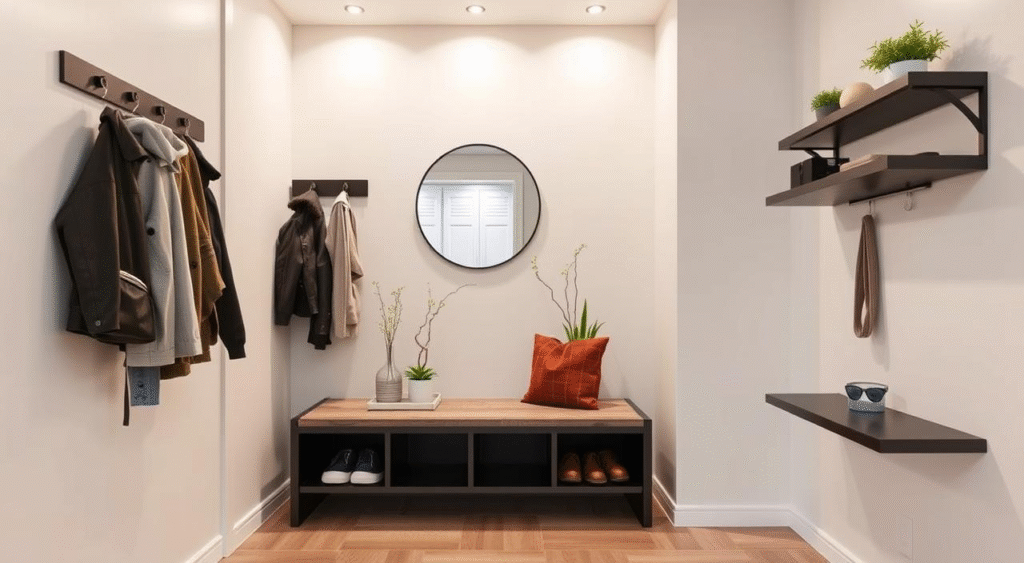
Measure before moving day
Record room W × L × H, door widths, corridor turns, lift size, and the tightest corner on the route. Measure assembled dimensions, not just box sizes.
Build a floor plan for fit and flow
- Draw to scale (paper works; Floorplanner/RoomSketcher if you like apps).
- Place the largest items first (bed, sofa, table).
- Keep 80–90 cm walkways clear.
A realistic 4-week countdown
| Week | What to do |
|---|---|
| 4 | Declutter by category; list items to sell/donate |
| 3 | Measure new home + delivery route; confirm movers |
| 2 | Pack non-essentials; label by room → zone → items |
| 1 | Pack daily kit; set up utilities, change address, book lift/parking |
Don’t skip: utility setup, renter’s insurance, and “before” photos of the new place.
What to bring: the right essentials for tight homes
Space-smart furniture (small footprint, big utility)
| Piece | Why it earns the space | Space-saving feature |
|---|---|---|
| Sofa bed or daybed | Guests without a guest room | Converts to sleep mode |
| Drop-leaf table | Desk by day, dining by night | Folds flat to wall |
| Storage bed | Clothes/linen hideaway | Deep drawers or lift-up base |
| Wall-mounted nightstands | Floor stays clear | Brackets or removable rails |
| Nesting tables | Expand for company | Stack when not in use |
Multi-use items worth the budget
- Ottoman with storage (shoes, throws, tech).
- Fold-flat stools (extra seats, plant stands).
- Multi-cooker (replaces slow cooker/steamer/rice cooker).
- Slim trolley/cart (moves from kitchen to desk to bedside).
Small-home tech and appliances
Pick compact footprints: 45–55 cm-wide dishdrawers, 60 cm or less fridges, cordless vac that hangs, and a power strip with flat plug + 2 m cord for odd outlets.
What to leave behind: the pre-move edit
The one-year rule (with a practical twist)
If it hasn’t been used or worn in a year—and it isn’t seasonal, sentimental, or safety-related—let it go.
Start with these categories
| Category | Easy wins to purge |
|---|---|
| Kitchen | Duplicate pans, single-use gadgets, expired spices |
| Wardrobe | Shoes that hurt, duplicates, “someday” sizes |
| Bath/Linen | Stained towels, extra sets beyond two rotations |
| Decor | Heavy frames, cracked vases, oversized mirrors that won’t fit |
Digitise paper and memories
Scan IDs, insurance, leases, manuals, and a few favourite photos. Back up to two places. Keep originals you legally need; recycle the rest.
“Edit the load, then the load edits your stress.”
Space-saving packing that unpacks fast
Compress soft goods
Vacuum bags or roll-tight compression for duvets and off-season clothes. Label by room + season.
Label like you’ll thank yourself later
- Box name: “BED – Nightstand”
- Line 2 (contents): “lamp, charger, book, glasses, meds”
- Priority dot: red = open first; blue = low priority.
Load for vertical gain
Heavier, flat items low; lighter bins stacked high. Dish crates upright with dividers; books in small boxes only to save your back.
First-week setup: land calm, not chaotic
Day-one essentials box (open first)
- Bedding, pillow, towel, basic toiletries
- Change of clothes, meds, phone chargers
- Kettle, mug, cutlery, plate/bowl, sponge, dish soap
- Multi-tool, scissors/knife, tape, power strip
Zone your multi-purpose rooms
- Sleep: bed, soft lamp, one shelf—nothing else.
- Work: small desk, task light, cable tray; turn away from bed.
- Relax: sofa/daybed, tray table, dimmable lamp, plant.
Kitchen/bath hacks that buy space
- Magnetic spice strip on the fridge side.
- Over-door rack for bath storage.
- Stackable bins under sink + labels facing out.
- Slim trolley between appliances or beside sofa.
A one-page small-space move-in checklist
Before the move
- Measure rooms, doors, turns, lift
- Floor plan with walkways marked
- Declutter by category (sell/donate/digitise)
- Book movers/lift/parking; set utilities; change address
Packing
- Vacuum/compress soft goods
- Label by room → zone → contents (priority dot)
- Box of day-one essentials
Arrival
- Photos of unit on entry (condition)
- Build bed first; make it
- Lamps + warm bulbs (2700–3000K)
- Set zones; cable manage; start a donation corner for misfits
Budget snapshot (what typical setups cost)
| Item | Budget | Notes |
|---|---|---|
| Storage bed (used or outlet) | $120–$350 | Measure drawer clearance |
| Drop-leaf table | $40–$150 | Wall-side or freestanding |
| Sofa bed/daybed | $150–$500 | Check depth + delivery route |
| Slim trolley/cart | $20–$70 | Kitchen or bedside |
| Over-door rack + bins | $15–$45 | Bath/entry/pantry |
| Warm bulbs + two lamps | $35–$90 | Instant calm lighting |
Keep it working: habits that hold the space
- One-in/one-out for clothes and kitchen tools.
- Five-minute reset nightly: clear surfaces, fold throw, place remotes in tray.
- Weekly sweep: vacuum, wipe high-touch zones, water plants.
- Monthly audit: one drawer or shelf; donate the misfits.
Conclusion
Small-Space Move-In Checklist homes reward clear choices. When you measure first, edit hard, and arrive with a simple layout, move-in week feels easy. Start with the bed made, a lamp on, and one surface tidy—that’s a home already. Add only what improves your daily routine. If an item doesn’t save space, time, or tension, it doesn’t belong. Your square metres haven’t changed, but the way they work for you has.
FAQs
How early should I start decluttering for a small-space move?
Four weeks out is ideal. Work by category so you see real progress and avoid re-boxing.
What sofa depth works best in tight rooms?
Aim for 85–90 cm or less, with visible legs to keep the room feeling light.
Is a storage bed worth it?
Yes—especially if wardrobes are shallow. Check drawer clearance and skirting height before buying.
How do I keep walkways clear in a studio?
Plan an 80–90 cm path from door to bed to kitchen. Use nesting tables and wall-mounted shelves to free floor space.
Best first purchase after moving in?
Warm lamps and a decent rug. Light and sound absorption do more for calm than another cabinet.
What if something won’t fit on move-in day?
Don’t force it. Photograph, list it for sale immediately, and use the cash for a smaller, better-fitting replacement.
How do I unpack without creating chaos?
Open the day-one box first (bed/bath/kettle). Then set zones and only unpack what serves those zones.