
If upstairs footsteps, hallway chatter, or street traffic keep hijacking your downtime, you’re in the right place. You can soundproof your apartment without drilling—no power tools, no wall repairs, and no awkward chats with your landlord. This guide shows what actually works in rentals: smart window inserts, weighty curtains, reversible seals, freestanding acoustic panels, rugs with dense underlay, and door fixes that take minutes. You’ll learn how to target the real problem (airborne vs. impact noise), which materials do what, and how to stack small changes for a big drop in decibels.
Noise 101: know your enemy so you fix the right thing
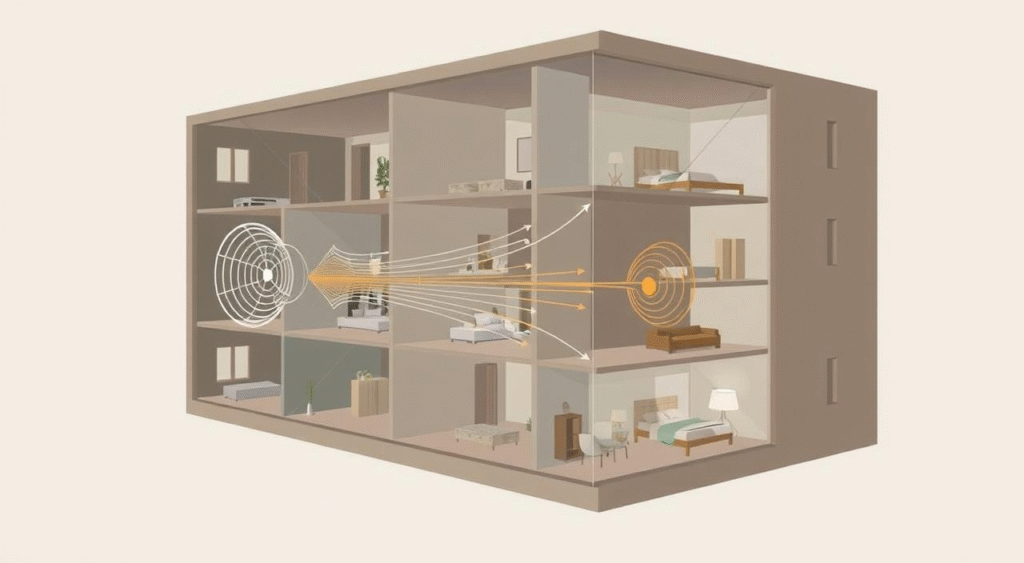
- Airborne noise = voices, TV, traffic. You combat it by sealing gaps and adding absorption/mass at windows, doors, and thin walls.
- Impact noise = footfalls, dropped objects, chair scrapes from above. You reduce it by softening surfaces (rugs + pads) and decoupling where you can (freestanding barriers).
- Flanking paths = sound sneaks around via gaps: under doors, around window sashes, outlet boxes, vent grilles. These are fast, easy wins.
“Block the leaks first, then absorb the leftovers.”
— Old studio rule that works just as well in apartments
The renter’s playbook (no holes, no headaches)
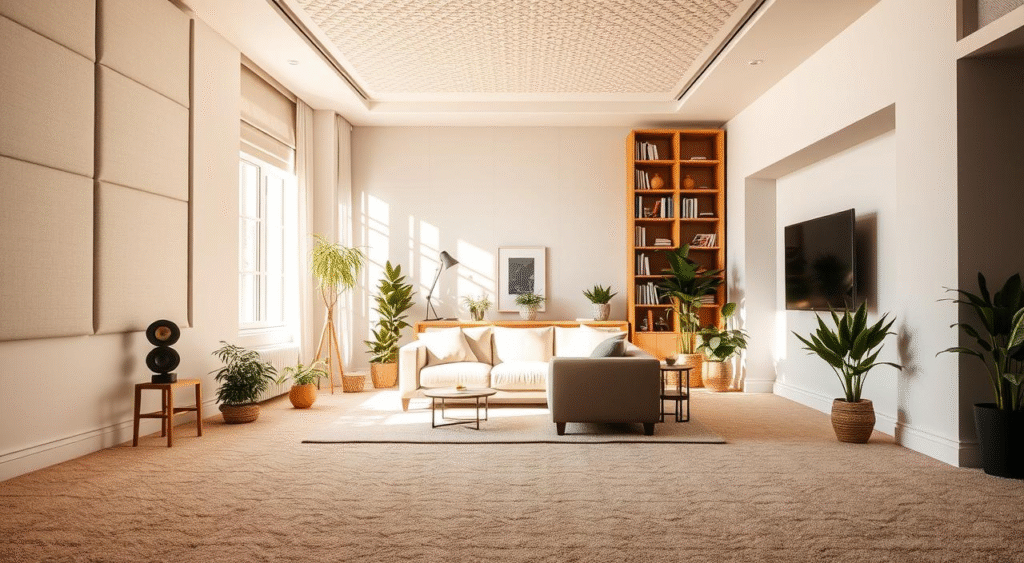
- Prioritize reversible gear (adhesive, compression, freestanding, over-door).
- Seal gaps before buying panels—leakage kills performance.
- Add mass where possible (heavier curtains, densely filled bookcases, MLV behind furniture).
- Layer solutions: a 20% cut in three places often beats one “hero” product.
- Keep a move-out kit (original screws, instructions, paint-safe adhesive remover).
Quick wins by target area
Windows (biggest airborne leak)
- Acoustic window inserts (clear acrylic in a compression frame) create a second “pane” and an air gap.
- Thermal/blackout curtains with real weight (≥300 gsm), hung wide and puddled on the sill/floor.
- Weatherstripping (V-seal + adhesive foam) around sashes, plus rope caulk for seasonal drafts.
- DIY plugs (rigid foam wrapped in fabric, press-fit) for night use in bedrooms.
| Window fix | Installs with | Typical result* | Notes |
|---|---|---|---|
| Compression acrylic insert | No tools | ★★★★ | Best renter option for traffic noise |
| Heavy curtains + double rod | Tension/adhesive brackets | ★★★ | Add magnetic side hems to seal edges |
| V-seal + foam weatherstrip | Peel-and-stick | ★★ | Cheap, fast, great for rattly sashes |
| DIY window plug | Press fit | ★★★★ (when in) | Bedroom lifesaver; remove for daylight |
| *Results vary with window build and gap size. |
Doors (second biggest leak)
- Door sweep (adhesive or magnetic) to close the bottom gap.
- Compression weatherstripping around the jamb (peel-and-stick felt or silicone).
- Door “mass”: hang a sound-absorbing curtain on a tension rod inside the unit, or mount a weighted quilt with removable adhesive snaps.
- Draft snake for quick night use.
| Door fix | Cost | Install time | Why it works |
|---|---|---|---|
| Adhesive door sweep | $10–$25 | 5–10 min | Kills the loudest slit in the room |
| Silicone jamb seals | $12–$20 | 10–15 min | Stops flanking around the latch |
| Absorbing curtain (tension rod) | $30–$80 | 10 min | Adds mass + absorption |
| Draft snake | $10–$20 | 0 min | Good temp fix for renters on day one |
Walls you share with neighbors
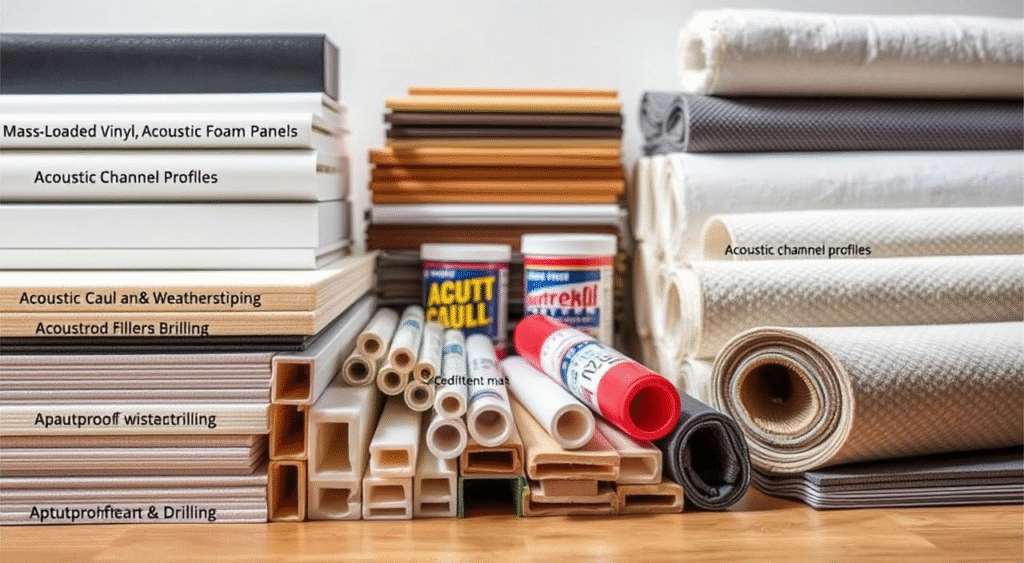
- Freestanding acoustic panels (no holes) or leaning panels behind the sofa/bed.
- Filled bookcases tight to the party wall (paperbacks + records are better than knickknacks).
- MLV sandwich: drape mass loaded vinyl behind a large canvas/tapestry; hang with multiple heavy-duty picture strips so the mass rests on furniture.
- Big art with a job: fabric-wrapped rigid insulation (DIY) using removable strips—absorbs mid/high speech.
| Wall tactic | Airborne speech | Impact from above | Landlord-safe |
|---|---|---|---|
| Freestanding panels | ★★★ | ★ | Yes |
| Bookcase filled with books | ★★ | ★ | Yes |
| MLV behind art | ★★★ | ★ | Yes |
| Fabric acoustic art (DIY) | ★★★ | ★ | Yes |
Floors & ceilings (impact noise & room ring)
- Area rug + dense pad (felt/rubber, 9–12 mm) where footsteps land.
- Interlocking rubber or cork tiles under a thin rug in high-traffic paths.
- Ceiling? Avoid drilling. Instead, use tall freestanding panels and soft furnishings to reduce perceived loudness.
| Floor layer | What to buy | Why it helps |
|—|—|—|—|
| Rug + felt/rubber pad | 100% felt or felt/rubber, heavy | Softens impacts, absorbs mid-high reflections |
| Rubber/cork tiles under rug | 8–12 mm | Adds spring + mass without glue |
| Fabric room dividers | Tripod screens/curtains | Breaks up sound paths across the room |
Kitchens & baths (hard, echoey rooms)
- Magnetic or adhesive gasket on metal doors, silicone sweeps for laundry/bath doors.
- Softening: washable runners, small cork mats, fabric roman shades.
- Vent gap hacks: foam register gaskets or removable filters to reduce whoosh (don’t block required ventilation).
Materials that actually help (and what each one does)
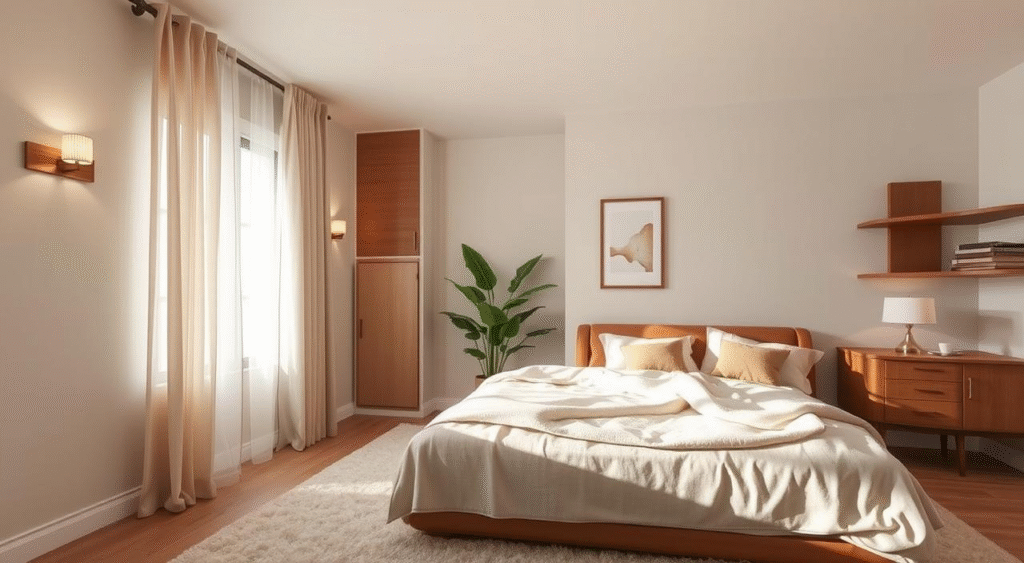
- Seals & sweeps (V-seal, foam, silicone): stop the whoosh. Best ROI.
- Absorbers (acoustic panels, dense curtains, plush rugs): reduce echo and speech clarity.
- Mass (MLV, filled bookcases, layered curtains): makes it harder for sound to vibrate through.
- Decouplers (freestanding panels, soft pads): separate surfaces so vibrations don’t transfer as easily.
A 60-minute quiet-start plan (bedroom version)
Minute 0–10: Find the leaks—put your ear to the door edges and window frames; feel for air movement with a tissue.
10–20: Install door sweep and jamb seals.
20–35: Apply V-seal/foam around the window; press in rope caulk where frames rattle.
35–45: Hang heavy curtains on a tension/damage-free rod; ensure they extend past the frame and touch floor/sill.
45–55: Drop a rug with a dense pad beside the bed; add a draft snake for the night.
55–60: Place a tall, filled bookcase or freestanding panel on the shared wall.
You’ll notice the biggest change at the door and window—two small gaps can carry a shocking amount of noise.
Budget builds (pick your lane)
| Kit | What’s inside | Est. cost | For who |
|---|---|---|---|
| Starter | Door sweep + jamb seals + draft snake + foam window strip | $40–$70 | Quick relief tonight |
| Sleeper | Compression window insert + heavy curtains + rug pad | $150–$350 | Light sleepers/street noise |
| Neighbor buffer | 2 freestanding panels + filled bookcase + art panel (DIY) | $180–$420 | Music/TV through party wall |
| Impact reducer | Large rug + premium felt/rubber pad + runner | $120–$300 | Footsteps/chair scrape above |
DIY that looks good
- Fabric acoustic art: Wrap rigid mineral wool or acoustic foam with thick fabric; mount with multiple heavy picture strips.
- MLV canvas: Attach MLV to a stretcher frame; hide with a tapestry; lean or strip-mount at multiple points.
- Window plug: Cut rigid foam to the reveal, wrap in blackout fabric, add pull tabs; press in at bedtime.
Styling so it reads as design, not “fix”
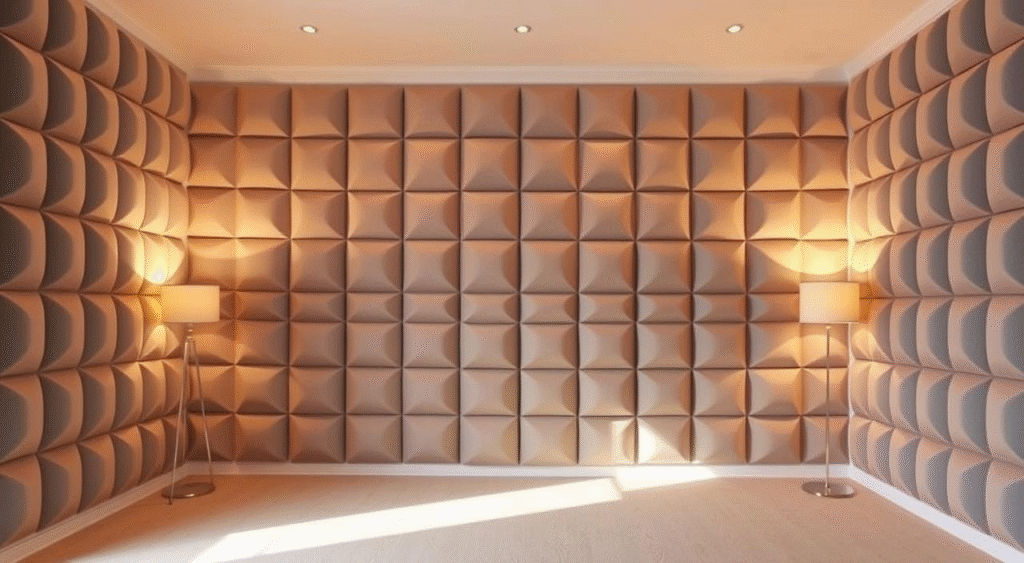
- Match metals/woods across rods, curtain rings, and panel frames.
- Use floor-to-ceiling drape height to make rooms feel taller and to trap more sound.
- Turn the bookcase into a feature: color-block spines, mix in baskets (they absorb too), add a plant for softness.
Common traps to avoid
- Foam stuck to walls with cheap tape (tears paint, underperforms). Use freestanding or removable hardware.
- Sheer curtains for noise (they’re for light, not sound). Choose dense, lined panels.
- One giant fix while ignoring gaps. Always seal first.
- Blocking required vents—bad for safety and air quality.
Maintenance & move-out
- Reseat suction cups monthly; replace tired door sweeps yearly.
- Warm adhesive with a hair dryer and pull tabs straight down to remove; clean residue with citrus remover.
- Keep original window/door hardware in a labeled bag; snap a photo of each area after you restore it.
Frequently asked questions
Will any of this help with upstairs footsteps?
Yes—on your side you can soften and scatter sound (rugs + dense pads, tall freestanding panels, fabric dividers). True structural isolation is a building job, but these steps reduce the sharpness and “thud.”
Can I hang heavy curtains without drilling?
Use a tension rod sized correctly or damage-free brackets rated for the load. For best results, double up panels or add a flannel interlining for extra mass.
Are foam “egg crates” worth it?
They tame echo but do little for blocking noise through walls. If you want less reverb, fine. If you want less neighbor TV, focus on seals, mass, and freestanding panels.
What’s the best first purchase on a tight budget?
Door sweep + jamb seals + a dense rug pad. Those three tackle the biggest leaks and the most annoying floor reflections.
Do window inserts really work?
Compression acrylic inserts are the best renter option for traffic and street noise because they add a second barrier and an air gap—often the single biggest improvement for bedrooms.
How do I keep it all renter-safe?
Choose reversible installs (compression, tension, freestanding, peel-and-stick). Test adhesives on hidden spots, follow cure times, and document removal with photos.
Can plants help with noise?
A little. Large, leafy clusters break up reflections but won’t block neighbor sound. Treat them as a finishing touch.
What about white noise?
A small sound machine or fan can mask residual noises after you’ve sealed and softened the room. It’s a complement, not a replacement for fixes.
Conclusion: layers win, gaps lose
Quiet comes from smart layers, not hero products. Seal the gaps at doors and windows, add weight and absorption where sound is strongest, and use freestanding pieces against shared walls. You’ll soundproof your apartment without drilling, keep your deposit safe, and gain a calmer home you can actually rest in. Start with one room—bedroom first—run the 60-minute plan, and stack improvements week by week. Small layers add up to real silence.